Are Fakes the Ultimate “Eat the Rich”?
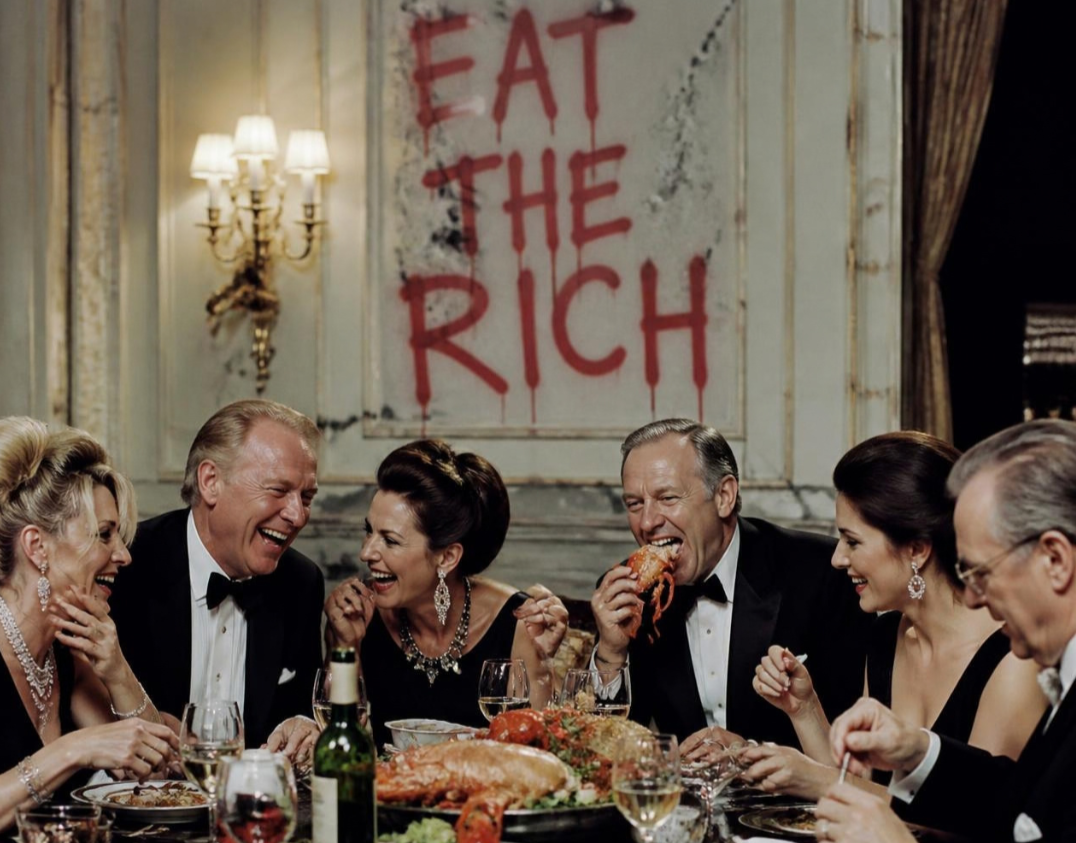
by Emilie Josephine Mentrup
(Note: while this post talks about Gen Z and the specific research related to their behaviors and feelings this is not a phenomenon restricted to Gen Z).
Gen Z has grown up as the first generation to never know a life before the internet. They have been flooded with climate change debates, political controversy, economic decline, and many other global disasters from birth – no doubt fueling their point of view. As a result they have developed their own way of surviving in this world: caring more, setting high expectations, and pushing the envelope.
Sometimes these beliefs have caused them to earn labels such as “lazy” and “entitled” (often from much older generations), but one researcher who interviewed more than 1,200 Gen Zers found that a typical Gen Zer is a “self-driver who deeply cares about others, strives for a diverse community, is highly collaborative and social, values flexibility, relevance, authenticity and non-hierarchical leadership, and, while dismayed about inherited issues like climate change, has a pragmatic attitude about the work that has to be done to address those issues.” (Stanford Report).
Why then, do these deeply caring, socially and intellectually aware, young people buy counterfeits? Is it perhaps because they have grown up aggrieved and mistrusting?
Gen Z Grievances and Trust
According to global communications company, Edelman, who publishes a yearly report on trust and grievances, Gen Z is more aggrieved and distrusting than previous generations–especially towards institutions and the wealthy:
58% of Gen Z globally say their sense of grievance against business, government, and the rich is moderate or higher
62% of those aged 13-27 in the UK believe that there is one law for the rich and one for the poor.
65% of Gen Zers, globally, think the wealthy’s selfishness causes many problems.
58% of brand leaders believe their company meets social responsibility expectations. Only 15% of Gen Zers agree.
With that level of distrust, brands may have a hard time turning Gen Zers into loyal, protective fans who rebut fakes.
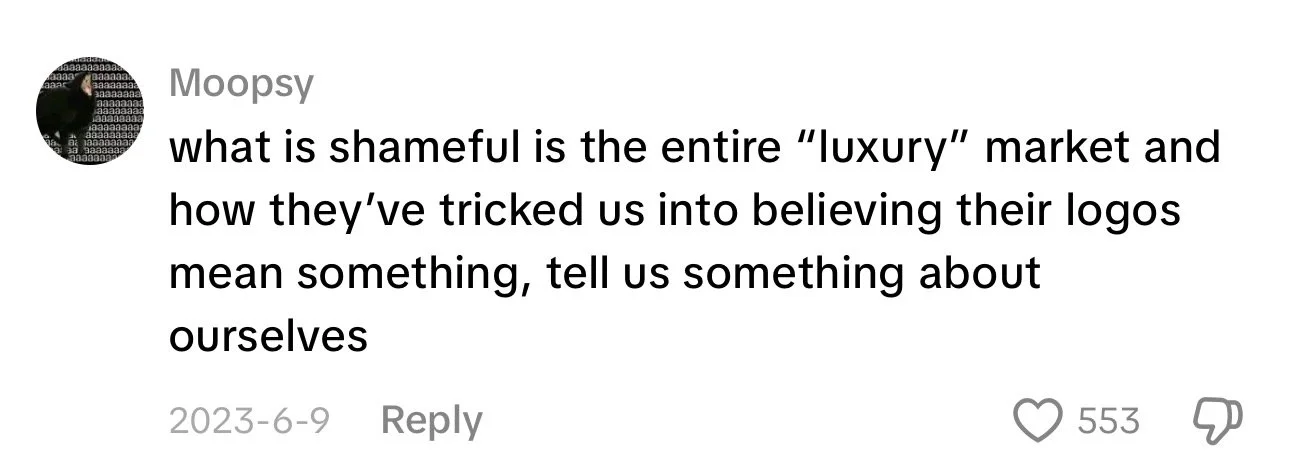
From the comment field on a TikTok video about “Superfakes”
The Obvious Contradiction
But there is an obvious contradiction here: if Gen Z distrusts these companies so much, why wear their brands at all?
First, Gen Z is much more likely to look to peers, creators, and smaller online communities when deciding what to believe and buy. Rather than taking a brand’s own messaging at face value, they increasingly rely on people they perceive as being more like them.
When thousands of TikTok users, Reddit commenters, micro-influencers, and friends openly discuss buying fakes, compare their quality to authentic products, and question whether luxury prices are justified, counterfeit purchasing becomes normalized within the community. The message is no longer coming from a brand saying, “counterfeits are wrong.” It is coming from peers saying, “why would you pay $3,000 when this looks the same?”
This helps explain how Gen Z can embrace fakes. They see them worn and discussed by influencers and peers they trust, while also seeing little social shame attached to buying them. Buying fakes can then become an act of rebellion while simultaneously signaling belonging to a group.
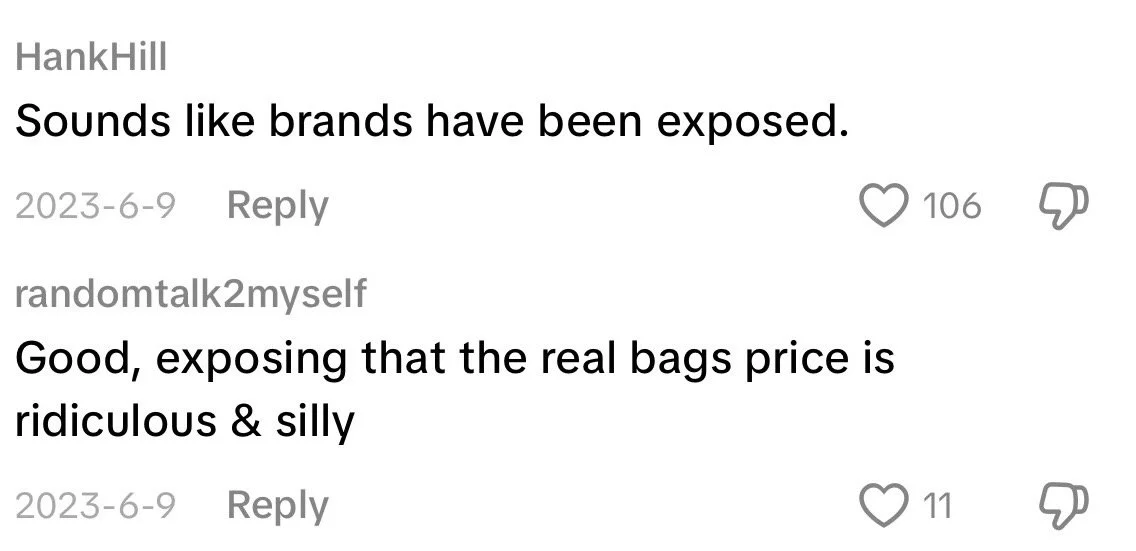
From the same TikTok comment section about “Superfakes”
Second, Gen Z’s distrust of institutions and the wealthy may change who they view as the victim in a counterfeit transaction.
If you believe that certain companies hate you - well, you might be less than willing to give them thousands of dollars for a bag - no matter how popular it is. But rejecting the company does not necessarily mean rejecting what the brand logo represents.
Luxury brands still carry enormous cultural value. Their products communicate taste, status, fashion awareness, aspiration, and membership in a particular aesthetic world. Social media has arguably made those symbols even more visible. A consumer can want the look, the recognition, and the cultural capital of a luxury product without believing the company deserves its asking price.
That is why counterfeits become particularly appealing. The buyer gets the Chanel bag, at least visually and socially, without giving Chanel thousands of dollars. From that perspective, buying a fake may not feel inconsistent with distrust of corporations at all. It may feel like having both things: access to the status symbol while refusing to financially participate in the system that made it exclusive.
Price obviously matters. But if price were the entire explanation, consumers could simply buy an affordable handbag from a non-luxury brand. Choosing a counterfeit instead suggests that something else is valuable too: the identity attached to the original brand.
And increasingly, their online communities may be telling them that doing exactly that is perfectly fair.
So, are fakes the ultimate “eat the rich”?
Probably not in any deliberate political sense. Most people buying a counterfeit bag are not making a calculated statement about wealth inequality or corporate power.
But the mindset behind the purchase may come from the same place.
For a generation that is deeply skeptical of institutions, frustrated by inequality, and increasingly likely to trust peers over corporations, buying a fake may not feel like stealing from a deserving victim. It may feel like refusing to pay into a system they already believe is unfair.
That is what makes the counterfeit problem harder than simply telling consumers that fakes are illegal or unethical. If young consumers do not see the brand as the victim, then brands and anti-counterfeiting organizations have to do more than defend intellectual property. They have to explain who else is affected, why authenticity matters, and why buying a fake is not quite the victimless act it can appear to be.
*Emilie Josephine Mentrup is a recent graduate of USC Gould School of Law where she focused her studies on anti-counterfeiting, intellectual property, and trademark enforcement. She is the author of The High Cost of Low-Price Products: Criminalizing Counterfeit Influencing on Social Media.